
Unanimously selected for the 2028 edition, the two towns secure €1 million. The “Arte che viene, arte che va” project combines installations, leading international artists and sustainable mobility
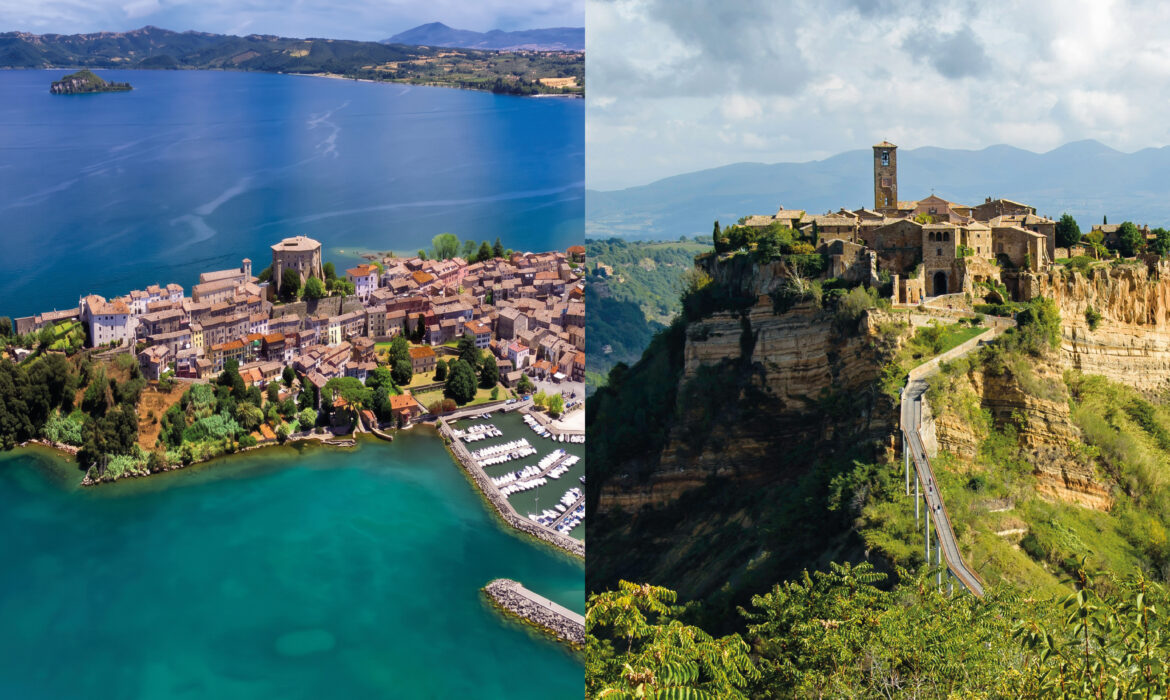
On one side, the centuries-old fragility of a village perched on the ridge of the badlands; on the other, the deep, reflective memory of a lake basin. Civita di Bagnoregio and Bolsena have been unanimously named Italian Capital of Contemporary Art 2028. The announcement was made in the Spadolini Hall at the Ministry of Culture, where the title and the €1 million financial contribution were awarded to the Viterbo partnership ahead of the other three finalists: Capri, Padua and Pozzuoli. The winning proposal is the “Arte che viene, arte che va” dossier, a coordinated project that establishes Tuscia as a crossroads for visual experimentation, showing how inland areas and small towns can become dynamic centres for contemporary artistic research.
Why the project was selected
In choosing the winning proposal, the jury sought to reward an idea of widespread, long-term cultural development, highlighting how “the project stands out for a vision that treats contemporary art not as an event to be consumed, but as a permanent cultural infrastructure”, with actions designed to “take root in the places themselves and continue to generate effects after the year of designation has come to an end”.
This approach fully reflects the priorities of national institutions. Minister of Culture Alessandro Giuli stressed that “the idea underpinning our cultural activities concerns the social function of culture, whose natural audience is the younger generations”.
Along the same lines, Massimo Osanna, Head of the Department for Cultural Activities at the Ministry of Culture, noted that contemporary artistic language is sometimes perceived as difficult because people lack the right tools to engage with it. For this reason, he said, there is a need to “invest heavily in education, involving schools and younger generations from primary level onwards through intensive awareness-raising programmes”. The international scope of the initiative was also underlined by Foreign Minister Antonio Tajani, who described the designation as “an important recognition of the ability of Italian territories to enhance their cultural heritage through dialogue with contemporary creativity”.
Permanent works, Tuscia Route 01 and the “Baleno” laboratory
Far from being conceived as a temporary festival, the action plan is intended to create a lasting physical and social legacy. The programme includes the creation of at least 35 permanent works, the regeneration of four disused architectural complexes and the development of an artistic heritage embedded throughout the landscape. Among the project’s main strands are 20 interventions centred on the theme of play, designed to encourage interactive and participatory engagement, as well as an Italian-style garden reimagined as an immersive environment to move through and explore.
Linking the village and the lake will be the “Tuscia Route 01”, a cycle and pedestrian route integrating sustainable mobility and slow tourism into the open-air exhibition circuit. To reach more isolated communities and take artistic experimentation beyond traditional museum settings, the programme will also introduce “Baleno”, a mobile travelling laboratory housed in an electric vehicle.
Five leading figures from the contemporary art scene — Carsten Höller, Eva Jospin, Chiara Camoni, Nico Vascellari and Tobias Rehberger — will contribute to the programme, bringing an international dimension through environmental installations and site-specific projects. From 2027 onwards, the initiative will also expand to include residencies for emerging creatives, alongside an educational programme designed to engage more than 10,000 students, with the support of FAI, the University of Tuscia, local authorities and third-sector organisations.
The “impossible” challenge of encouraging people to return
The outcome of the selection has resonated strongly with the local administrations involved. The Mayor of Civita di Bagnoregio, Luca Profili, underlined the exceptional nature of the result given the scale of the initial challenge: “Civita has 14 residents and, together with Bolsena, we do not even reach 10,000 inhabitants. We knew it was a difficult challenge, almost impossible.”
The Mayor of Bolsena, Andrea Di Sorte, echoed and expanded on this vision, expressing the ambition to “become a model for contemporary art”, building on installations and worksites that have already been active for months in the two towns. For Di Sorte, the designation brings with it a commitment to “do better and represent Italy by doing so with heart”, placing the fight against depopulation and the creation of conditions favourable to the return of younger generations at the centre of the strategy. In dedicating the achievement “to the resilience, authenticity and love that the people of the province of Viterbo have for their land”, the mayor also emphasised his shared outlook with Profili, reflecting two communities that, while maintaining distinct identities, are pursuing a common strategic vision.
The enthusiasm was also echoed by the Mayor of Viterbo, Chiara Frontini, who described the victory as “a wonderful day for Tuscia and the entire province of Viterbo”, confirming the strength of a shared path capable of projecting the area’s heritage and expertise towards future cultural challenges at European level.